Programming & Web Development · Guide
How long does it take to learn Python? Honest timelines
Basics in three to six weeks of short daily sessions. Genuinely useful scripts by month two or three. Job-ready in six to twelve months. The variable that moves those numbers most is not talent. It is what you build between lessons.
The Nextversity teamProgramming & Web Development schoolUpdated August 10, 20265 min read
On this page
The honest timelines
- 3–6 weeks: the fundamentals (variables, loops, functions, lists, files). Enough to write a small script without googling every line. This is what the Python certificate covers.
- 2–3 months: useful automation (renaming a thousand files, scraping a page, cleaning a spreadsheet). The point where Python starts paying rent.
- 6–12 months: job-ready. Real projects with data, APIs and tests, the territory of the advanced certificate.
Those ranges assume 20–30 minutes most days. Twenty focused minutes a day beats a heroic Sunday. Consistency is the only study hack that survives a bad week.
What actually changes the timeline
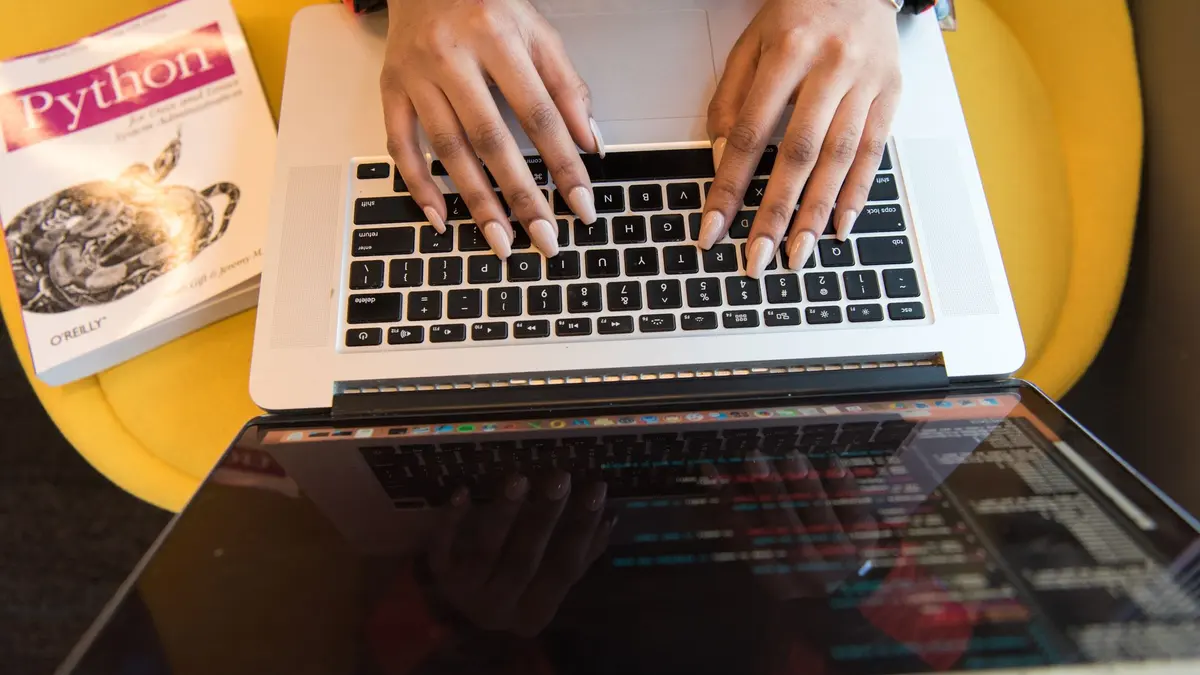
One thing, mostly: whether your hands are on the keyboard. If your hands weren’t on the code this week, you didn’t practice this week. Watching lessons is orientation, not learning.
A typical upskiller learns in the gaps: twenty minutes before work, one lesson at lunch. Six weeks later the spreadsheet report that used to take a morning takes eleven minutes, because a script does the boring part. Small, boring consistency (not a bootcamp sprint) is what fits around a real life.
Python's popularity helps here: it has topped or led language rankings for years (see the Stack Overflow Developer Survey), which means every error message you'll ever hit has already been answered somewhere.
A week-by-week plan that survives real life
- Weeks 1–2: fundamentals with the official tutorial or a structured course. Type every example; never paste.
- Weeks 3–4: small scripts about your own life: rename your photos, total your spending, check a website.
- Weeks 5–6: one slightly-too-big project. Getting stuck and unstuck is the curriculum.
- Month 3+: automate one genuinely boring task from your job. This is the moment Python becomes permanent.
Use AI to speed up the parts you understand. Using it to skip the understanding is how you end up unable to check its work.
What "job-ready" actually means
The six-to-twelve month figure hides a detail worth stating: almost nobody is hired for Python alone. The job is Python plus something.
- Data roles: Python plus SQL plus the ability to explain a finding. SQL is usually the harder filter.
- Web development: Python plus HTML and CSS, plus a framework, plus how the web actually works.
- Automation and operations: Python plus the systems you are automating, which you may already know from your current job.
That is good news for the timeline, because the second skill is often one you already have. A finance person who learns Python is more employable than a Python learner who knows no finance.
The signposts that tell you where you are
Better than counting weeks:
- You can write a loop without looking it up. End of the fundamentals.
- You can read an error message and form a hypothesis. This is the biggest single jump, and it usually arrives around week four.
- You finished something you actually use. Month two or three, and the point most people stop calling themselves a beginner.
- You can read someone else's code and follow it. Months in, and it is the skill professional work depends on most.
If you are stuck on the second one, that is normal. Debugging feels like failure and it is the job.
When Python is the wrong first move
If your actual goal is building websites, start with HTML & CSS. You’ll see results in hours and meet programming concepts gently. If your work lives entirely in spreadsheets, Excel data analysis may deliver the same payoff faster. Python is the best general-purpose choice, not the universal one.
There is also a full beginner roadmap if you want the order laid out stage by stage.
Questions people ask
Can I learn Python in a month?
You can learn the fundamentals in a month of daily practice: variables, loops, functions, lists and files. You will not be job-ready, and you will be able to write a small script that does something real.
How many hours a day should I study Python?
Twenty to thirty minutes most days beats several hours once a week. Programming is a language, and languages reward repetition over intensity.
Is Python enough to get a job on its own?
Rarely. Most roles want Python plus something: SQL and analysis for data work, or web fundamentals and a framework for development. The combination matters more than depth in one.
Why do people take longer than these estimates?
Almost always because they watched rather than typed. Following along with a tutorial feels productive and does not build the ability to start from an empty file.
Do I need a degree to work with Python?
No. Employers hiring juniors look at code they can read and a conversation about your decisions. A degree helps at some employers and is irrelevant at many.